

Key takeaways
- WhatsApp changed its Business API pricing in October 2026, removing per-template fees and moving to per-conversation billing — making smart automation essential to control costs.
- An AI chatbot on WhatsApp can handle lead qualification, appointment booking and order updates 24/7 without human involvement.
- Businesses in the Gulf and Pakistan that use WhatsApp AI automation report 3–5× faster response times and 40–60% lower support costs.
- The WhatsApp Business API requires an approved provider; a developer or agency sets it up for you — you do not need technical skills.
- A WhatsApp AI chatbot can be live in as little as one to two weeks and typically costs $500–$2,000 to build.
WhatsApp is where your customers already are. In the Gulf, Pakistan, South Africa and across much of the world, it is the first place people reach out to a business — before email, before phone, before a website contact form. In October 2026 Meta changed how the WhatsApp Business API is priced, and the businesses best placed to manage those costs are the ones that have automated what happens when a customer sends that first message.
Here is what changed, what a WhatsApp AI chatbot does, and how to get one working for your business in two to four weeks.
What changed with WhatsApp Business API pricing in October 2026
Meta simplified its pricing model. Previously, businesses paid per template message and per conversation window, with different rates for marketing, utility, authentication and service conversations. The new model is conversation-based: you pay for a 24-hour conversation window, regardless of how many messages are exchanged inside it.
For businesses that send a single well-timed message per customer and keep the conversation going, costs tend to fall. For businesses that relied on sending many individual template blasts to cold lists, the new model forces a rethink.
The implication is straightforward: the more you can do inside a single conversation window — qualify the lead, answer objections, take a booking, send confirmation — the lower your cost per customer. That is exactly what an AI chatbot on WhatsApp is designed to do.
What a WhatsApp AI chatbot does for a business
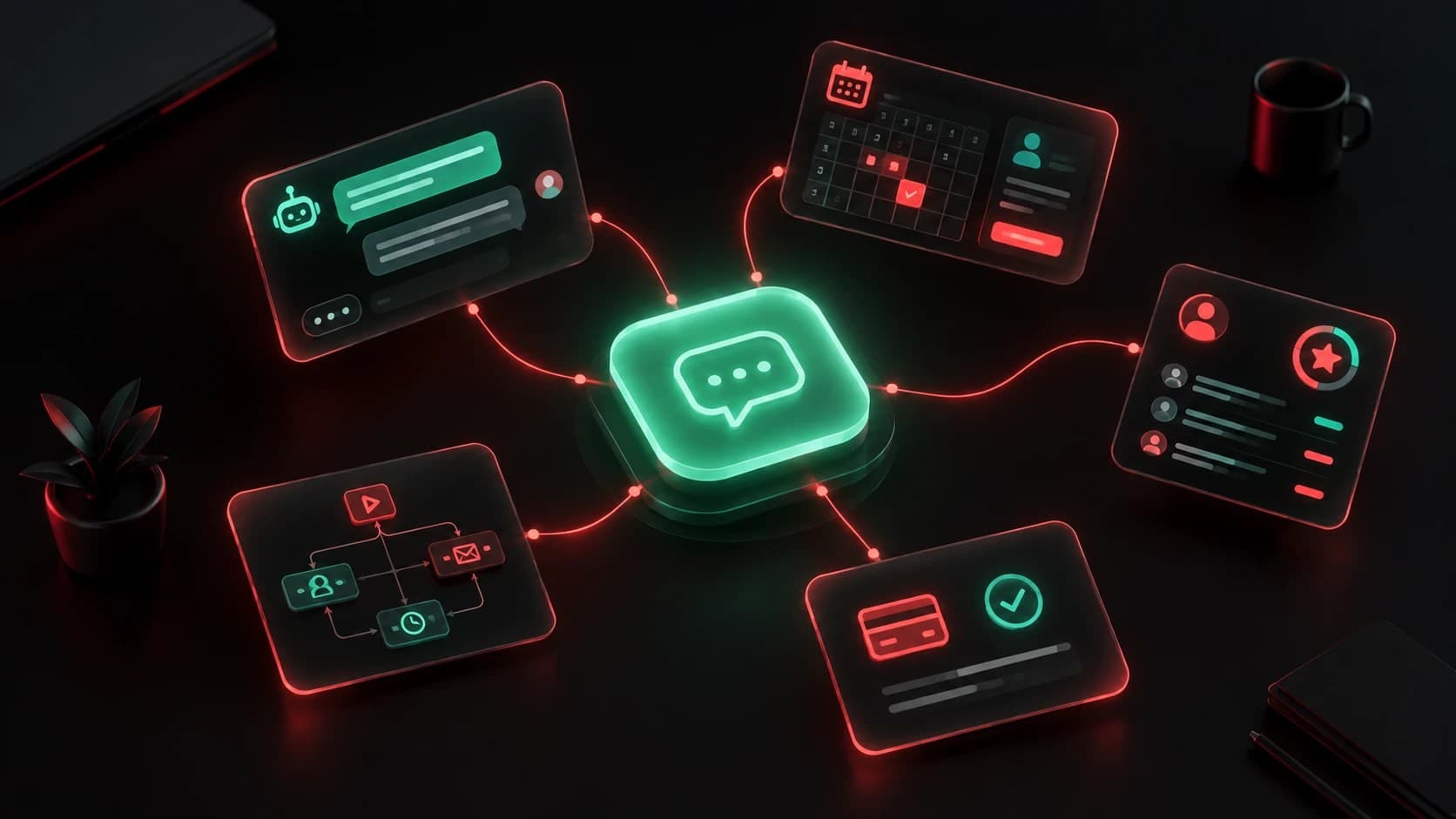
An AI agent connected to your WhatsApp Business account reads every incoming message, understands what the customer is asking and either replies or takes action. Common tasks:
Answers enquiries instantly. Pricing, product details, opening hours, availability — the agent replies in seconds from the knowledge base you give it, at any hour, in the customer's language.
Qualifies leads. "Tell me what you are looking for" → "What is your budget?" → "Would Thursday or Friday work for a call?" A structured qualification flow runs automatically, and the agent hands the conversation to your sales team with a summary once the lead is ready.
Books appointments. The agent connects to your calendar, checks real availability and creates the booking without any back-and-forth with your team. It sends reminders and handles reschedules.
Sends catalogues and price lists. A customer asks "What do you have?" — the agent sends the relevant product or service list as a message, not a PDF that gets ignored.
Follows up automatically. A lead who went quiet three days ago gets a gentle follow-up. A customer who received a quote but did not respond gets a check-in. These sequences run on schedule, triggered by what the customer did or did not do.
Takes payments. Depending on your region and preferred payment gateway, the agent can send a payment link and confirm receipt in the same chat.
Industries where WhatsApp automation works especially well
Real estate and property
Agents receive hundreds of enquiries per listing. An AI agent qualifies buyers and renters, sends virtual tour links, books viewing appointments and filters serious prospects from browsers — all before a human agent touches the conversation.
Clinics and healthcare
Appointment booking, reminder messages, post-visit follow-up and prescription readiness notifications — all on WhatsApp, where patients already communicate. See AI for healthcare for how it works.
E-commerce and retail
Order confirmations, shipping updates, return requests and upsell messages in the same chat. Customers in the Gulf expect real-time updates; WhatsApp is how you deliver them at scale.
Professional services
Law firms, consultancies, accounting firms and agencies use WhatsApp automation for initial enquiry handling, document collection and appointment scheduling, cutting the administrative time per client.
Restaurants and hospitality
Table reservations, menu enquiries, daily specials, event bookings and customer feedback — a WhatsApp agent handles each touchpoint in the channel customers prefer. See AI for hospitality.
The build process, step by step
Getting a WhatsApp AI chatbot live involves four steps:
- Business verification — Meta verifies your business before granting API access. An agency submits this for you; it typically takes three to seven business days.
- Phone number registration — Your WhatsApp number is registered on the API. It cannot already be active on the standard app.
- AI and flow build — The chatbot's logic is built: the intents it recognises, the answers it gives, the integrations with your CRM or booking system, and the human handover rules.
- Testing and launch — The agent is tested across common scenarios before going live with real customers.
Most businesses are live within one to two weeks for a basic build, two to four weeks if CRM and calendar integrations are included.
What it costs
| Build type | Cost | Timeline |
|---|---|---|
| Basic FAQ + lead capture | $500 – $1,000 | 1 – 2 weeks |
| Lead qualification + CRM | $1,000 – $2,000 | 2 – 3 weeks |
| Full automation (booking, payment, follow-up) | $2,000 – $4,000 | 3 – 4 weeks |
| Monthly API + hosting | $50 – $150 | Ongoing |
These are one-time build costs. The running cost is the WhatsApp API conversation fee plus hosting, typically $50–$150 per month for a small business with moderate volume.
How to start
You need three things: a WhatsApp Business phone number you can dedicate to the API, a list of the questions and tasks you want to automate, and an approved WhatsApp Business API provider to submit your verification.
AleyaAI is a WhatsApp automation agency serving businesses in the Gulf, Pakistan, South Africa and the United States. We handle the API setup, the AI build, the CRM connections and the ongoing support. Most clients are live within two weeks.
See a real WhatsApp automation build and its results, then book a free strategy call to see exactly what a WhatsApp AI chatbot would look like for your business, and what it would cost.
Want this working in your business? We build it end to end.
See how we build it