

Key takeaways
- At GTC Berlin on 21 October 2026, Jensen Huang announced the DSX POD — a containerised AI factory built on Vera Rubin GPUs that cuts deployment time from six months to 14 days.
- Nvidia also released OpenShell, an open-source sandboxed runtime for AI agents, designed to let agents execute code, tools and actions safely inside enterprise infrastructure.
- Nvidia committed nearly $10 billion to Europe's AI ecosystem, covering data centres, startups and sovereign AI initiatives across the continent.
- For businesses, DSX POD makes private, on-premises AI infrastructure accessible at a scale previously reserved for cloud hyperscalers, while OpenShell gives developers a standard way to deploy agents without building their own sandboxing.
At GTC Berlin on 21 October 2026, Nvidia CEO Jensen Huang announced two products that are pulling enterprise AI in opposite directions at once: a containerised AI factory that brings hyperscale compute to on-premises deployments, and an open-source agent runtime that makes it easier to deploy AI agents on any infrastructure. Together they describe the next phase of enterprise AI — more powerful, more private and easier to deploy than anything available 12 months ago.
DSX POD: An AI Factory That Ships in a Container
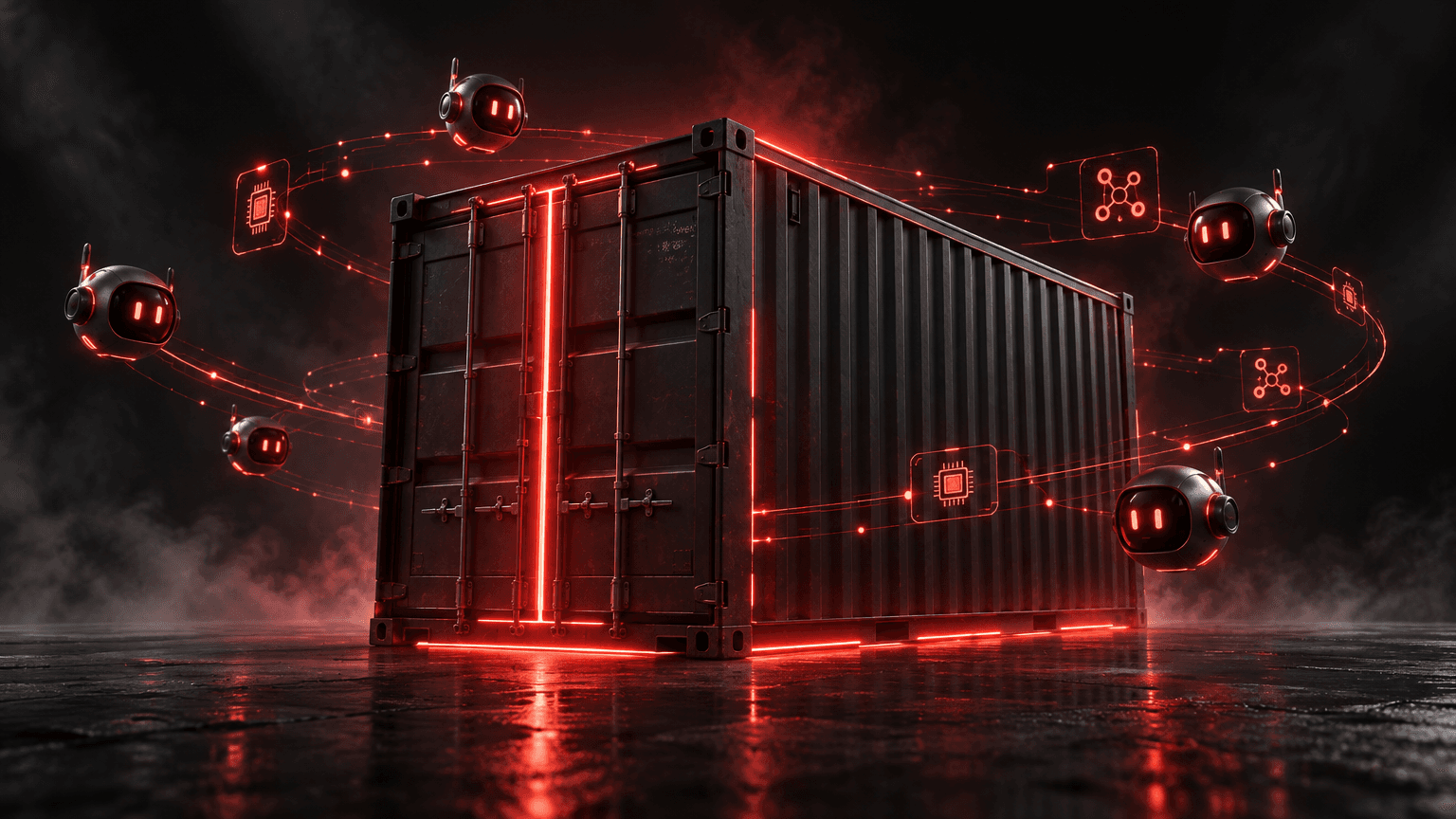
The most significant hardware announcement at GTC Berlin was the DSX POD — a containerised AI computing unit built on Nvidia's Vera Rubin GPU architecture.
The problem DSX POD is solving is not technical. It is operational. Building a production-grade AI infrastructure from individual components — servers, networking, cooling, software stack, integration — takes large enterprises six months or more. Even with the best vendors and the most experienced teams, the configuration complexity slows everything down.
The DSX POD ships pre-configured. An organisation receives a container-sized unit, connects it to power and network, and has a production AI factory running in roughly 14 days.
What that factory can do:
- Run large language models and AI agents at inference scale, on-premises
- Process thousands of simultaneous AI requests with low latency
- Keep all data inside the organisation's own infrastructure — no cloud egress
- Scale by adding additional pods rather than rebuilding from scratch
For industries where data must stay on-premises — financial services, defence, healthcare, government — DSX POD changes the calculus. Private AI infrastructure that previously required 6–12 months to deploy and dedicated infrastructure teams to operate can now be up in two weeks.
OpenShell: A Standard Runtime for Enterprise AI Agents
The second major announcement was OpenShell, an open-source sandboxed runtime for AI agents.
Most AI agents today run inside cloud platforms — OpenAI's API, Anthropic's Claude APIs, Microsoft Copilot Studio. These platforms handle the sandboxing: they make sure the agent can call tools and execute code without breaking out of its environment or accessing systems it should not touch.
Enterprises that want agents running inside their own infrastructure — either for security reasons or because their data cannot leave the building — have had to build their own sandboxing layer. That is significant engineering work, and it is largely undifferentiated: every team building it is solving the same problem in a slightly different way.
OpenShell is Nvidia's attempt to give those teams a shared starting point:
| Feature | What it does |
|---|---|
| Sandboxed execution | Agents run code and call tools inside an isolated environment that cannot reach outside its boundaries |
| Tool integration | Standard connectors for databases, APIs, file systems and internal services |
| Audit logging | Every agent action is logged with enough context to reconstruct what happened and why |
| Air-gap compatible | Designed to run in environments with no internet connection — relevant for defence, government and regulated industries |
| Open source | The core runtime is available under a permissive licence; Nvidia offers enterprise support and integrations |
OpenShell does not compete with agent frameworks like LangChain or AutoGen. It sits below them — it is the environment those frameworks run inside, not the logic that drives agent behaviour.
The $10B Europe Commitment
Beyond hardware and software, Jensen Huang used GTC Berlin to announce nearly $10 billion in European AI investments. The commitments span:
- Data centre expansion — new Nvidia-powered compute capacity across European markets
- Sovereign AI partnerships — support for national governments building AI infrastructure under local data laws
- Startup ecosystem — a programme supporting European AI startups with compute access, technical resources and go-to-market support
The European announcement matters for two reasons. First, it accelerates access to Vera Rubin compute for European businesses that have been waiting behind US and Asian cloud regions in the GPU availability queue. Second, it signals that Nvidia is positioning itself as the infrastructure partner for sovereign AI — the governments and enterprises that want AI capability without dependence on US cloud providers.
What This Means If You Are Building AI Products
The DSX POD and OpenShell together answer a question that large enterprises have been asking for the past 18 months: when will enterprise-grade private AI infrastructure be practical at our scale?
The answer, as of GTC Berlin 2026, is now — with caveats:
- DSX POD is for large-scale deployments. If you are running dozens of AI sessions per day, cloud infrastructure remains the right choice. DSX POD makes economic sense when your AI workload justifies dedicated hardware, typically in the hundreds of concurrent sessions range and above.
- OpenShell is for teams building agent infrastructure. If you are deploying agents on cloud APIs, you do not need it. If you are building an agent that must run inside your own environment without internet access, OpenShell gives you a tested foundation rather than a blank page.
For most businesses — those building customer-facing chatbots, internal automation agents or AI-powered workflows — the immediate practical implication of GTC Berlin is not "we should buy a DSX POD." It is that the infrastructure cost of enterprise AI is falling, which will lower the cost of the cloud services those businesses already use.
AleyaAI builds AI agents and automation workflows that run on standard cloud infrastructure and integrate with existing business systems. If you are thinking about where your AI infrastructure should live over the next three to five years — cloud, private cloud or on-premises — that is a conversation worth having before your workloads grow large enough to lock you in. We can also help your team evaluate whether an n8n-based automation layer between your AI agents and your internal systems gives you the flexibility to move between infrastructure options without rebuilding your logic.
Nvidia's GTC Berlin announcements do not change what AI can do. They change who can afford to run it privately, at scale, and with production reliability. For enterprise AI, that is the next unlock.
Want this working in your business? We build it end to end.
See how we build it